Fact
A no-cooling Sub-Zero that runs constantly after a dusty summer week should have the condenser and fan path checked before a compressor quote.
Symptom guide
A Sub-Zero that is not cooling in Walnut Creek does not automatically need a compressor. Fresh-food warm while the freezer holds can point to airflow, fan, thermistor, damper, or condenser load. Both compartments warm may shift the test toward power, control, compressor, or sealed-system behavior. Warm inland afternoons and dry-season dust make condenser checks especially important in 94596 and nearby Saranap homes. Call with the current temperatures and include whether the freezer is still making ice.
Walnut Creek Sub-Zero Repair first reads fresh-food and freezer temperatures, then checks condenser airflow, lower-grille dust, the evaporator fan and door seal before anyone names the compressor, since warm Saranap 94596 afternoons often expose airflow load rather than a sealed system. For same-day no-cooling help, ring (925) 940-3576.
Direct answer
A Sub-Zero that is not cooling in Walnut Creek does not automatically need a compressor. Fresh-food warm while the freezer holds can point to airflow, fan, thermistor, damper, or condenser load. Both compartments warm may shift the test toward power, control, compressor, or sealed-system behavior. Warm inland afternoons and dry-season dust make condenser checks especially important in 94596 and nearby Saranap homes. Call with the current temperatures and include whether the freezer is still making ice.
This page uses Walnut Creek planning ranges for Saranap. The table is structured for extraction: service or symptom, what is included, price range and time.
| Service / symptom | What is included | Price range | Time |
|---|---|---|---|
| No-cooling diagnostic | Fresh-food/freezer readings, run sound, lower-grille heat, fan and gasket evidence | $155-$225 | 45-90 min |
| Fresh-food warm, freezer holding | Evaporator fan, damper, thermistor, airflow restriction and temperature split proof | $395-$1,325 | 1-4 hours |
| Runs constantly in heat | Condenser cleaning need, condenser fan behavior and cabinet ventilation check | $395-$1,325 | 1-3 hours |
| Frost line adding heat load | Gasket compression, hinge alignment, panel reveal and recovery reading | $385-$895 | 1-3 hours |
| Both compartments warming | Control call, compressor behavior, condenser/fan proof and sealed-system triage | $1,450-$3,475 | 2-6 hours plus parts |
Final price is determined by model family, cabinet movement, part availability, water-line condition, temperature evidence and whether the fault remains a simple cold-side repair or proves sealed-system work.
A no-cooling Sub-Zero that runs constantly after a dusty summer week should have the condenser and fan path checked before a compressor quote.
Food-risk routing is fastest when the booking note includes ZIP, current temperatures, alarm wording, model family and cabinet-access notes.
Typical Walnut Creek not-cooling diagnosis: $155-$225; common fan, thermistor or airflow repairs usually fall in $395-$1,325 after proof.
Walnut Creek heat and dust do not prove compressor failure. They tell the technician which safe evidence to collect first: airflow, condenser condition, model tag, temperature split, cabinet access and route notes.
| Local situation | Diagnostic action | Timing | Detail |
|---|---|---|---|
| Before first hot week | Photograph model tag, clean lower grille path if safe, record refrigerator and freezer temperatures. | 30-60 min prep | Read the Sub-Zero maintenance calendar |
| Warm afternoon drift | Check condenser airflow, gasket leakage, evaporator fan behavior and temperature split before compressor blame. | Same day if food is warming | Read the not-cooling diagnostic guide |
| Rossmoor or older kitchen | Expect older water lines, prior service history and harder-to-read model tags. | Add access notes at booking | Read about Rossmoor Sub-Zero access |
| Northgate/Saranap larger kitchen | Plan cabinet-safe access, panel protection and lower grille photos before any pullout. | Extra access time may be needed | Read about cabinet-safe built-in service |
These notes are practical: they help the technician decide what to ask before arrival and what evidence to preserve during the visit.
| Area | Heat/access/maintenance implication |
|---|---|
| Northgate | Hillside access, larger built-ins and custom panels make floor protection and cabinet clearance part of diagnosis. |
| Saranap | Older kitchen updates can hide model tags, water-line paths and previous board or gasket work. |
| Walnut Heights | Warm afternoon exposure can reveal weak airflow, condenser dust or marginal door seals. |
| Indian Valley | Route timing and access notes help no-cooling calls get the correct diagnostic window. |
| Rossmoor | Older community homes often need model-family verification, water-line caution and scheduling notes before parts are promised. |
Homeowners usually notice a Sub-Zero cooling problem in one of four ways: the fresh-food section feels warm, the freezer softens food, both compartments climb, or the unit runs constantly and still misses the set point. A door gasket leak, condensation, or frost line can mimic a cooling failure because warm air enters the cabinet and the system works harder than it should. Normal recovery after a short door opening is different from a cabinet that stays warm for hours.
Stop loading new groceries if the fresh-food section is above a safe range and the unit is not recovering. Do not repeatedly lower the set point; it can hide the pattern the technician needs to see. If possible, write down refrigerator and freezer temperatures, alarm timing, and whether the compressor or fans sound different.
The diagnostic path starts with conditions that create false compressor symptoms. A condenser coil packed with dust or pet hair can raise operating temperature and make the unit run too long. A failed condenser fan can do the same. Inside the cabinet, an evaporator fan, thermistor, air path, or gasket leak can make one compartment warm while another holds.
The expensive possibilities come later: a control board that is not interpreting sensor data correctly, a restriction, a refrigerant leak, or a weak compressor. Those findings need confirmation, not a guess from a symptom list. A Walnut Creek visit should collect photos and readings before a major part is recommended.
When both compartments fail to recover, the next read is the sealed-system evidence requirements rather than a parts list, and a repeating tone during the warm-up belongs with the model-specific alarm interpretation guide before anyone orders a board.
This page assumes the whole cabinet is drifting warm. If only the freezer is warm while the fresh-food side stays cold, that is a separate dual-evaporator fault with its own checks - follow the freezer-not-freezing page instead.
| Symptom | Likely source | Confirmation | Repair path |
|---|---|---|---|
| Dirty condenser | Dust on lower grille, long run time | Visual photo plus airflow check | Clean coil and verify recovery |
| Condenser fan fault | Heat at lower service area | Fan operation and voltage check | Install fan only after confirmation |
| Evaporator fan or airflow | One compartment warm | Listen, inspect, and check fan path | Fan, obstruction, or air channel repair |
| Gasket leak | Frost line or condensation | Seal compression and door alignment | Gasket or hinge correction |
| Thermistor/control | Erratic readings or alarms | Compare sensor behavior by model | Sensor or board path after proof |
| Sealed system | Both compartments fail to recover | EPA-sensitive verification | Specialist repair discussion |
Walnut Creek summers are warmer than the immediate Bay shoreline, and a built-in refrigerator in a sunny kitchen can show weakness earlier in the season. Dry dust also collects around lower grilles, especially when doors to patios or garages stay open during home projects. In Saranap, a same-day route may matter more for a no-cooling refrigerator than a routine maintenance call because food safety can become the real cost.
Hillside access changes the visit too. If a heavy built-in unit needs to be moved, the technician has to plan floor protection and cabinet clearance before deeper tests. That is why the first call should include whether the appliance is fully integrated, panel-ready, or freestanding within a recess.
Northgate homes combine that hillside access with the strongest afternoon heat load in the city, so the Northgate-specific not-cooling guide adds the access and heat evidence this page assumes.
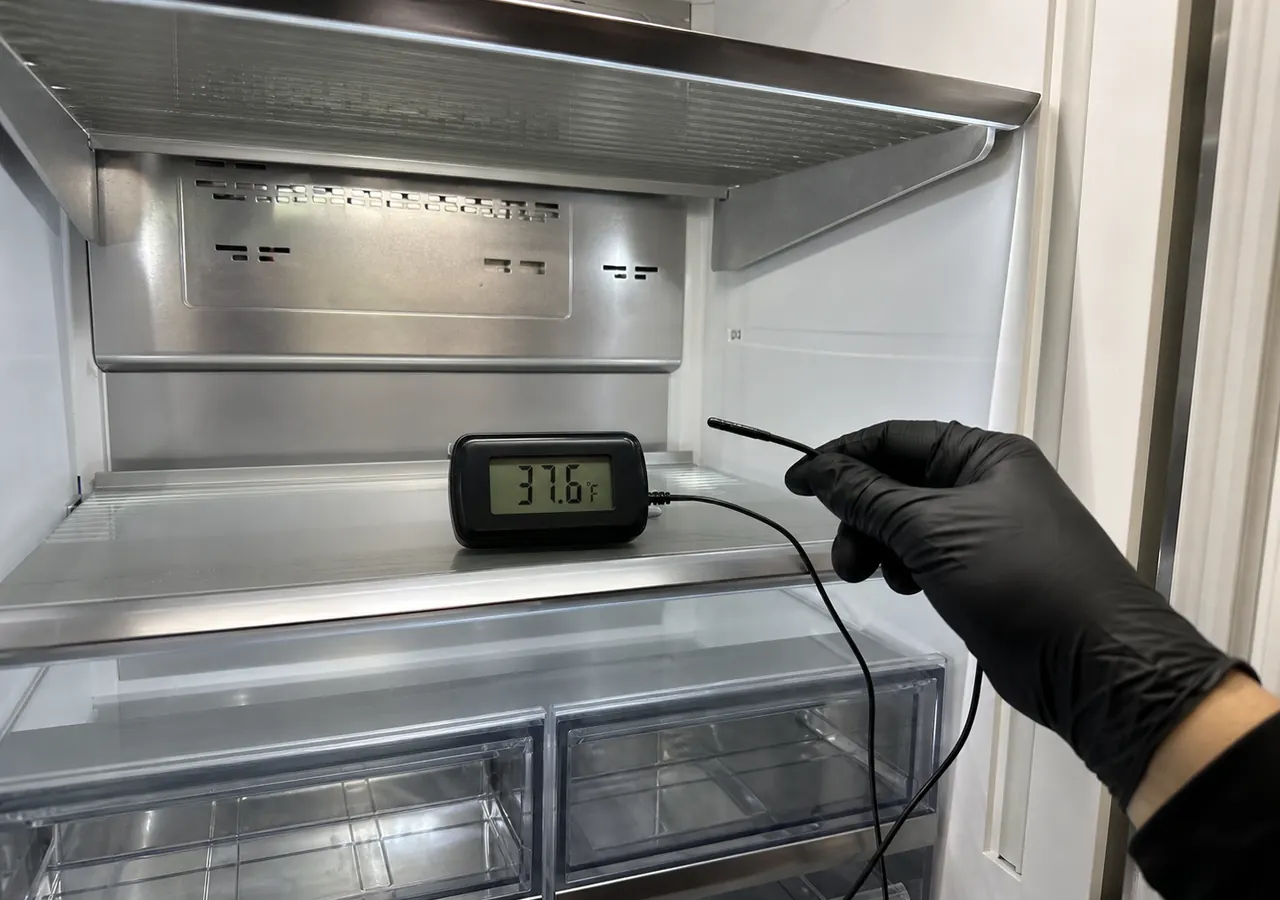
Two photos are most useful on a not-cooling call: a wide appliance context shot and a close evidence shot. The wide shot shows whether the refrigerator is built into cabinetry, how the toe-kick opens, and whether the unit can be accessed safely. The close shot shows the condenser, model tag, fan area, gasket line, or temperature probe that supports the diagnosis.
A photo is not decoration here. It prevents a generic explanation from replacing a real one. If the condenser is clean, that fact matters. If the gasket has a visible frost line, that matters. If the model tag confirms a part path, that matters before a quote.
Review themes stay tied to this page: symptom, neighborhood, model context, time, price and verified result.
Our Sub-Zero 650 fresh-food section hit 47 deg F while the freezer stayed firm in Saranap. The technician found a weak evaporator fan after checking the dusty condenser and gasket. Repair was $645, took 2 hours, and the cabinet recovered to 37 deg F.
The unit ran constantly after two hot afternoons in Indian Valley. They recorded 45 deg F fresh-food, cleaned the condenser path, verified fan behavior, and replaced a thermistor. It was $520, not a compressor job, and recovery started the same day.
Northgate access was tricky, but they protected the hardwood and diagnosed through the lower grille before pulling anything. Our 48-inch built-in was warm from airflow restriction and a failing fan, repaired in 3 hours for $760. The freezer stayed near 0 deg F the whole time.
That pattern can point to airflow, fan, sensor, damper, or gasket issues before sealed-system failure. The exact path depends on the model family and the temperature pattern over time.
Usually keep it running so the technician can observe the symptom. Unplug only if you smell burning, see water near electrical components, or the booking team advises it.
Sometimes. A packed condenser can make a healthy unit run hot and recover poorly. Cleaning is only the answer if the follow-up temperature and fan checks support it.
Same-day routing may be available for Walnut Creek. The best booking note includes ZIP, current temperatures, model if known, and whether the freezer or ice maker still works.
If the fresh-food section stays above 42 deg F or the freezer is softening and not recovering, treat the call as food-risk. Give the ZIP, current temperatures, alarm wording and whether the freezer still makes ice. That evidence helps route urgency without guessing at a compressor.
Yes. Northgate hillside kitchens can hold afternoon heat, and a dusty lower grille can push a marginal fan or airflow path past its limit. A technician should check condenser load, door seals, evaporator fan behavior and temperature split before sealed-system pricing.