
Symptom diagnostic · Walnut Creek
Sub-Zero freezer not freezing in Walnut Creek: fridge cold, freezer warm
When a Sub-Zero freezer warms up while the fresh-food side stays cold, it surprises people - a single appliance with two different temperatures. The explanation is the built-in's dual-evaporator design: the freezer has its own cold source and airflow, so it can fail on its own. That makes a warm freezer a distinct problem from a unit that is not cooling at all, and usually a narrower, less costly one to fix.
4.9/5 · 1,542 verified customer reviews
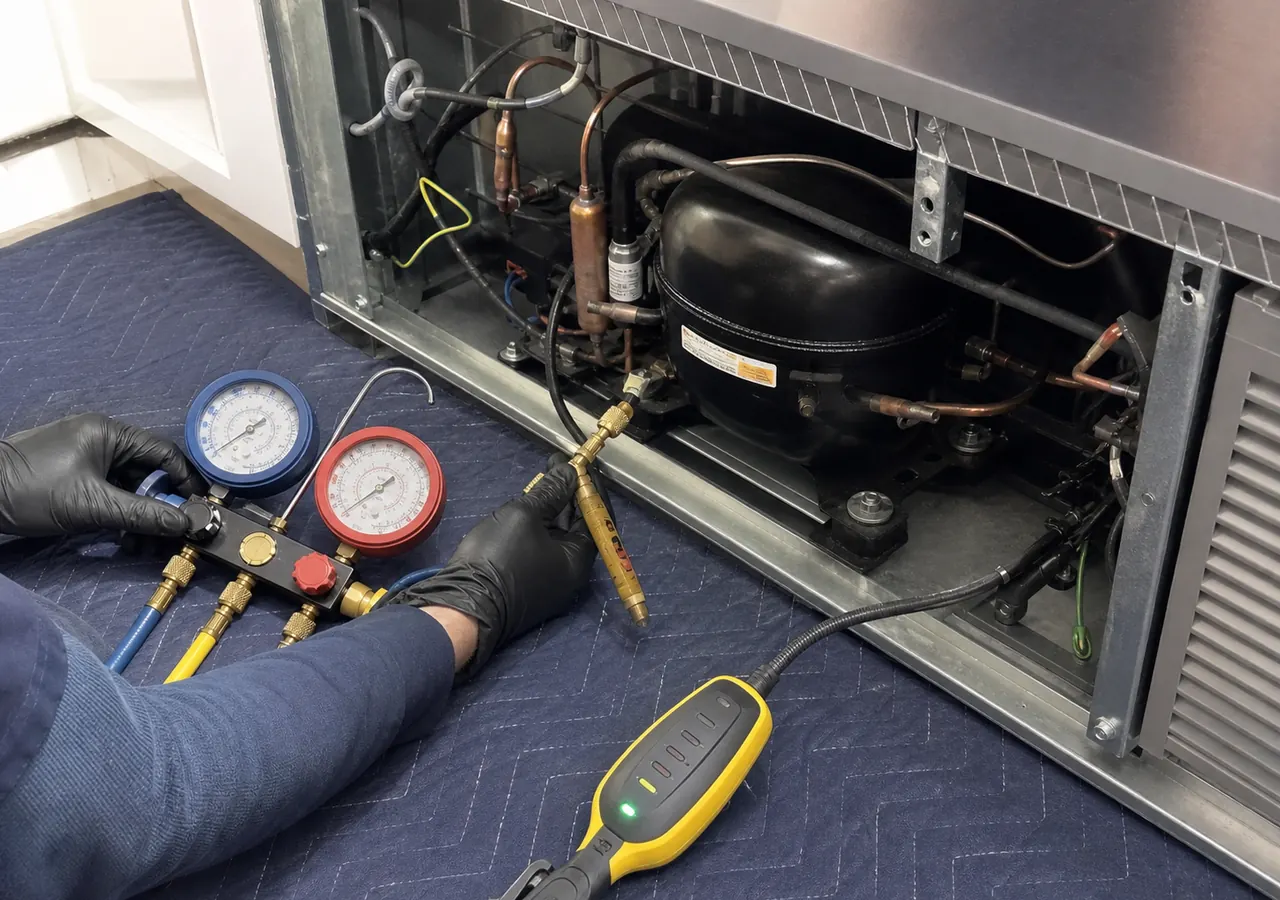
The single most useful thing to understand about this symptom is why it is even possible. A basic refrigerator has one cold source and lets air spill from the freezer into the fresh-food compartment, so when it fails, everything warms together. A Sub-Zero built-in is engineered the opposite way. Most models use dual evaporators - or two entirely separate sealed systems on many column units - so each compartment is cooled and defrosted on its own. That independence is what keeps food fresh longer and humidity controlled, and it is also what lets the freezer warm up while the refrigerator beside it stays a perfect 38 degrees.
Because of that design, a warm Sub-Zero freezer is a focused problem. The fact that the fresh-food side is still cold is actually good news: it usually proves the compressor and condenser are alive and the home's power is fine. The investigation narrows to the freezer's own circuit - its defrost system, its evaporator fan, and the airflow that moves cold around the compartment.
What fails when only the freezer warms
The defrost system. This is the most common cause on built-in column freezers, which are common in Walnut Creek kitchens. The freezer coil naturally collects frost, and a heater and thermostat melt it on a cycle. If the heater or its thermostat fails, frost keeps building until it forms a wall of ice over the coil, airflow chokes, and the compartment warms even though the system is trying to cool. The tell is heavy, uneven frost on the back wall.
The evaporator fan. A small fan blows cold air off the freezer coil and through the compartment. If it stalls, wears, or seizes, the coil may still get cold but the cold never circulates, so the freezer warms while the coil itself frosts. A buzzing or silent freezer fan often arrives with this symptom; if your unit is also noisy, the noise and the warming are likely the same part.
A blocked or iced drain. When the defrost drain ices over, meltwater backs up and refreezes near the coil and fan, blocking airflow from a second direction. This overlaps with leak symptoms, so a freezer that both warms and drips is usually one drainage story.
The door gasket and the load. A seal that no longer closes tightly lets warm air leak in faster than the coil can remove it, and an overpacked compartment or a box against the rear vent does the same by starving airflow. In Walnut Creek, the daily swing from a hot, dry afternoon to an air-conditioned evening raises the moisture load on a marginal gasket, so a seal that was just adequate can tip the freezer into a slow warm-up.
The sealed system - on the right model. If you have a column with an independent freezer system, it is possible for that one sealed system to lose its charge or develop a compressor fault while the refrigerator's separate system keeps working. This is the less common but more serious branch, and it is exactly why model identification matters before any part is named.
Single-system versus dual-system - why your model matters
Two Sub-Zeros with the identical symptom can need different repairs depending on their refrigeration layout. On a classic over-and-under built-in with one compressor and a damper, a warm freezer is almost always defrost, fan, or airflow. On a paired column installation - a separate refrigerator column and freezer column, the kind found in many remodeled Northgate and Rudgear Estates kitchens - the freezer has its own sealed system, so the list of possible causes shifts. Reading the model and serial tag first is what keeps the diagnosis honest and stops a fan problem from being quoted as a sealed-system job, or the reverse.
Make sure it is really freezer-only
Before you treat this as a freezer-only fault, confirm the fresh-food side truly is holding. If both compartments are drifting warm, the problem is more likely the shared condenser, sealed system, or power, and you should work through the Sub-Zero not-cooling diagnostic instead. Disambiguating the two up front saves a wasted visit. For what the likely repairs cost, the Walnut Creek repair cost page lists the ranges by symptom.
Confirm the symptom before the visit
- Confirm both compartment temperatures. Put a thermometer in the freezer and another in the fresh-food side for an hour. A freezer above 10 deg F while the refrigerator holds near 38 deg F is the signature of a single-compartment fault, not a dead unit.
- Listen for the evaporator fan. With the freezer door open, the interior fan should pause; many people press the door switch by hand to hear it run when closed. A silent or buzzing freezer fan is one of the most common reasons a Sub-Zero freezer warms while the fridge stays fine.
- Look for frost in the wrong places. Heavy frost coating the back freezer wall, or ice creeping along the bottom of the compartment, points to a defrost-system fault - the heater, thermostat, or a drain that has iced over and is blocking airflow.
- Check the load and the door. An overpacked freezer or a box blocking the rear vents starves the compartment of cold air. Confirm the door is closing fully and the gasket is sealing; a Walnut Creek kitchen that swings from a hot afternoon to AC stresses a marginal seal.
- Identify single- versus dual-system. Note your model number. Some Sub-Zero built-ins use one sealed system with a damper feeding both sides; others (many columns) use independent systems per compartment. Which design you have changes what a warm freezer means and how it is repaired.
- Book before everything thaws. If the freezer keeps climbing, move what you can to ice and book promptly. Have the model and serial photo and both temperatures ready so the right defrost or fan part is planned.
Related Walnut Creek pages
Land on the right symptom
Not cooling at all
If both compartments are warming, the shared system is the place to start, not the freezer alone.
Noisy or buzzing
A silent or buzzing evaporator fan often shows up as both a noise and a warm freezer.
Back to Sub-Zero repair
The main Walnut Creek diagnostic hub with price ranges and the full visit sequence.
Warm-freezer questions from Walnut Creek
Why is my Sub-Zero freezer warm but the fridge still cold?
Because a Sub-Zero does not cool like a one-box refrigerator. Built-ins use dual-evaporator or dual-system designs, so the freezer has its own cold source and airflow. When the freezer warms while the fresh-food side stays fine, the fault is isolated to the freezer's circuit - typically its defrost system, its evaporator fan, or airflow blocked by frost - rather than a whole-unit failure.
How is this different from a Sub-Zero that is not cooling at all?
A unit that is warm everywhere usually points to the shared sealed system, the condenser, or power. A freezer-only fault is narrower and often less expensive, because the refrigerator side proves the compressor and condenser are still working. If both compartments are warming, start instead with the broader not-cooling diagnostic.
What usually causes a Sub-Zero freezer to stop freezing?
The frequent causes are a failed defrost heater or thermostat (frost builds on the coil until it blocks airflow), a stalled or worn evaporator fan, a drain that has iced over, a door gasket that no longer seals, or an overpacked compartment blocking the vents. On older built-in column freezers common in Walnut Creek kitchens, the defrost components are the usual culprits.
Does Walnut Creek's summer heat make this worse?
It contributes. Long, hot Diablo Valley afternoons make the freezer's defrost and frost cycle work harder, and a heat-stressed evaporator fan that is already worn is more likely to stall during a triple-digit week. Heat does not create the fault, but it often brings a marginal defrost or fan problem to the surface in summer.
Is a warm freezer urgent?
Fairly. Frozen food begins to thaw within hours once the freezer climbs past about 10 to 15 deg F, and a partial thaw and refreeze is both a food-safety and a quality issue. It is not a same-hour emergency like a flood, but it should be diagnosed the same day or next so you do not lose the contents.