
Symptom diagnostic · Walnut Creek
Sub-Zero making noise: buzzing, humming or rattling in Walnut Creek
A Sub-Zero is built to run quietly, so a new buzz, drone, rattle or repetitive click stands out - especially in a quiet Walnut Creek home. The trick is to tell the harmless sounds (a soft compressor hum, a refrigerant gurgle, the ice maker's click) from the ones that mean a fan motor or bearing is wearing out. This page helps you name the noise, locate it, and decide whether it is service-now.
4.9/5 · 908 verified customer reviews
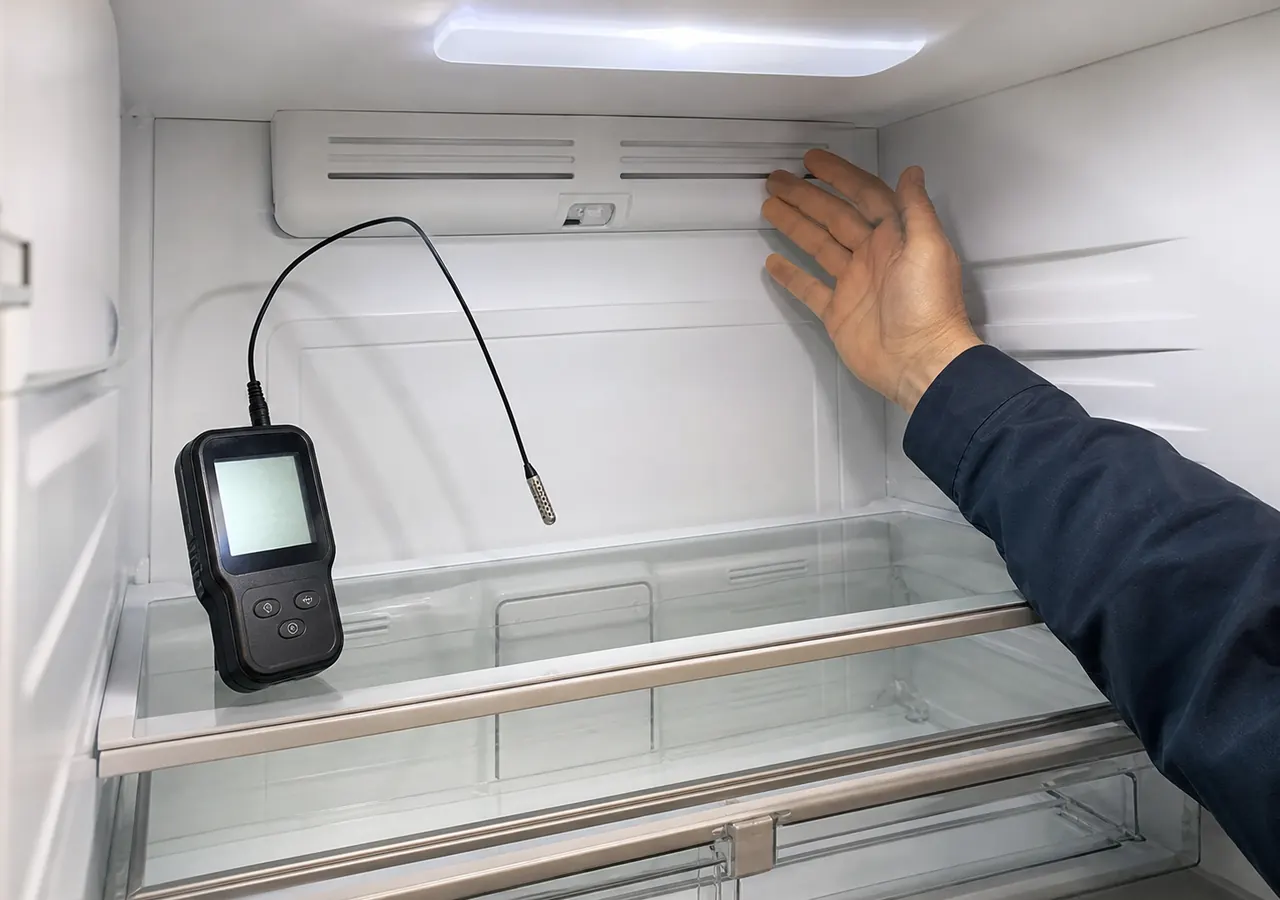
Noise is one of the most useful symptoms a refrigerator can give you, because the kind of sound points almost directly at the part making it. A Sub-Zero built-in has two fans, a compressor, a condenser, and an ice maker, and each fails with its own signature. The goal of this page is to help you describe what you are hearing precisely enough that the right repair is planned the first time, instead of a technician arriving to a machine that has gone politely silent.
Start with the difference between the everyday sounds and the warning sounds. A Sub-Zero is supposed to make some noise. Refrigerant moving through the sealed system gurgles and occasionally hisses. The compressor hums. Plastic and metal parts tick faintly as they expand in a cooling cycle and contract in defrost. The ice maker clicks and drops a batch into the bin. None of that needs attention. What does need attention is anything new, loud, or rising - a buzz you can hear across the room, a rattle, a grind, or a rhythmic tick that was not there last month.
Name the noise, find the cause
A loud or rising buzz. This is the classic worn-fan signature. A Sub-Zero relies on a condenser fan near the compressor and an evaporator fan behind the freezer wall. As a fan motor bearing wears, it buzzes, whines, or drones, often louder when the fan first kicks on. A buzz loudest at the lower grille is usually the condenser fan; a buzz from high inside the freezer is the evaporator fan.
A rattle or repetitive tick. A fan blade that has shifted, loosened, or grown a small ridge of ice will tap or rattle against its shroud once per revolution. The evaporator fan ticking against frost is common when a defrost issue has let ice build where it should not be, which is why a rattle and a warming compartment sometimes arrive together.
A deep, constant hum or drone. When the condenser is choked with dust, the fan and compressor work harder and the whole unit hums louder. In Walnut Creek's dry-season air the lower grille fills with fine dust and pet hair faster than people expect, so a gradually louder drone is often just a strained, dirty condenser - one of the cheaper outcomes.
An electrical buzz with little airflow. A fan motor that buzzes but barely turns, or a compressor relay that chatters, is an electrical fault rather than a worn bearing. This one is worth prompt attention because it can leave the unit unable to cool.
Normal gurgles, pops and clicks. If the sound is intermittent, soft, and matches the cooling or ice cycle, it is almost certainly the sealed system or ice maker doing its job. Recording it lets a technician confirm that over the phone before you spend on a visit.
Why Walnut Creek's heat makes noises show up here first
The inland Diablo Valley climate is the reason a marginal fan often fails in Walnut Creek before it would in a cooler coastal town. Through July and August the afternoons run hot and dry, frequently into the triple digits along the Mount Diablo foothills and through Northgate and Shell Ridge. To hold temperature against that load, both fans run longer and at higher demand, and the condenser sheds more heat. A bearing that was quietly wearing all spring gets pushed past its limit during the first heat wave, which is why so many noise calls cluster in the summer months. The same heat is why keeping the lower grille clear matters - covered in detail on the Walnut Creek summer heat guide.
Why a buzzing fan should not wait
A noisy fan is a warning, not just an annoyance. Once a worn evaporator fan seizes, airflow across the cold coil collapses and the compartment warms even while the compressor keeps running - so a noise problem quietly becomes a not-cooling problem. Catching it at the buzzing stage usually means replacing a single fan motor; catching it after a seizure can mean a warm box, spoiled food, and a longer visit. The honest call is to diagnose the sound while it is still only a sound. For what that typically costs, see the Walnut Creek repair cost ranges.
Pinpoint the sound before the visit
- Name the noise out loud. Is it a low steady hum, a high electrical buzz, a rattle or vibration, a rhythmic click, or a gurgle? The character of the sound narrows the cause faster than its volume. Record ten seconds on your phone with the door closed so the technician hears exactly what you hear.
- Locate where it comes from. Stand at the lower grille, then beside the upper hinge, then to the rear if you can reach it. A buzz loudest at the toe-kick usually means the condenser fan; a buzz from up high inside means the evaporator fan behind the freezer wall.
- Note when it happens. Constant, only after a door open, only during ice harvest, or worse on hot afternoons? In Walnut Creek a noise that appears during the long triple-digit Diablo Valley summers often means a fan is working harder against heat and a marginal bearing is starting to fail.
- Rule out the easy stuff. Make sure the unit is not rocking on an uneven floor, that nothing on top is vibrating against the cabinet, and that the toe-kick grille is seated. A loose grille against a running fan makes a surprising rattle in an otherwise quiet Rossmoor villa.
- Check the lower grille airflow. If the condenser area is packed with a season of dry-weather dust and pet hair, the condenser fan strains and gets louder. Vacuuming the accessible grille is safe; pulling the unit or reaching into the fan is not.
- Book before a bearing seizes. A fan that buzzes today can seize tomorrow and take the cooling with it. Have your model and serial photo ready and describe the sound and its location so the right fan or motor is on the van.
Related Walnut Creek pages
If the noise comes with another symptom
Not cooling
If a seized fan has already let the fresh-food side warm, work through the not-cooling diagnostic.
Door gasket & seal
A fan that runs long after the door opens can trace to a seal that lets warm air in.
Back to Sub-Zero repair
The main Walnut Creek diagnostic hub with price ranges and the full visit sequence.
Sub-Zero noise questions from Walnut Creek
Which Sub-Zero noises are normal and which are not?
Normal: a soft compressor hum, occasional gurgle or hiss as refrigerant moves, light cracking as parts expand and contract, and the periodic click of the ice maker harvesting. Not normal: a loud or rising buzz, a metallic rattle or grinding, a rhythmic ticking from a fan blade hitting ice, or a hum loud enough to hear from the next room. The new or worsening sounds are the ones to diagnose.
Why did my Sub-Zero suddenly get loud this summer?
Heat is the usual trigger in Walnut Creek. During the long, dry inland summers the condenser and evaporator fans run longer and faster to hold temperature, and that extra duty is exactly what exposes a fan motor bearing that was already marginal. A unit that was quiet in spring often turns loud in the first triple-digit week off Mount Diablo.
What is the buzzing or rattling usually caused by?
Most service-now noises come from a fan: the condenser fan near the compressor or the evaporator fan behind the freezer wall. A worn bearing buzzes or whines, a blade that has shifted or iced up rattles or ticks against its shroud, and built-up dust makes the condenser fan strain and drone. Less often a failing compressor or a mounting that has loosened over years of vibration is involved.
Is a buzzing fan an emergency?
It is not a same-hour emergency, but it should not wait. A fan that is buzzing is on its way to seizing, and once an evaporator fan stops, airflow drops and the compartment warms even though the compressor still runs. Booking while it is only noisy is cheaper and safer than waiting until it also stops cooling.
A new buzz is very noticeable in my quiet home - does that mean it is serious?
Not necessarily serious, but worth checking. In the quiet of a Rossmoor villa off Tice Valley, or a hillside Saranap or Rudgear Estates house, a small change in fan sound is obvious where a busy kitchen would mask it. The change matters more than the absolute volume - a noise that is new or getting worse is the signal, however faint.