Symptom diagnostic · Walnut Creek
Sub-Zero leaking water on the floor in Walnut Creek
A Sub-Zero that pools water under the toe-kick is almost never a refrigeration failure - it is a drainage or water-supply path that has stopped behaving. On a Walnut Creek built-in the three usual suspects are a frozen or clogged defrost drain, a weeping water inlet valve or fill tube, and condensation from a tired door gasket. This page helps you locate the source safely and protect the cabinetry before a technician arrives.
4.9/5 · 675 verified customer reviews
When a Walnut Creek homeowner finds water on the kitchen floor in the morning, the instinct is to assume the refrigerator is dying. With a Sub-Zero built-in the opposite is usually true: the cooling circuit is fine, but the water it naturally produces during each defrost cycle is escaping where it should not. Understanding which path has failed is the whole job, because the fix for a clogged drain is nothing like the fix for a leaking inlet valve.
The first thing worth knowing is that every frost-free Sub-Zero makes water on purpose. The evaporator builds up a thin layer of frost as it cools, and on a timed cycle a small heater melts that frost. The meltwater is supposed to run down a trough, through a drain tube, and into a shallow pan near the compressor where the heat of the condenser evaporates it. When any link in that chain blocks, the water overflows onto your floor while the food stays perfectly cold - which is exactly why a leak with no warming is so common.
Where the water is really coming from
A frozen or clogged defrost drain. This is the leading cause of a front-center puddle. Over the years the small drain opening collects food film and mineral residue, then a slug of ice forms in the trough and blocks the next defrost cycle. The melt has nowhere to go, so it sheets forward and drips out the bottom of the door or the toe-kick. Clearing and flushing the trough, and sometimes fitting a drain heater clip, ends the cycle of refreezing.
A weeping water inlet valve or fill tube. If your Sub-Zero has a plumbed ice maker or water dispenser, a solenoid valve opens to admit water on demand. Central Contra Costa water is moderately hard, and over time scale can hold that valve slightly open so it weeps continuously, or it can stiffen the fill tube. A side-of-unit puddle, or water tracking from the rear, often points here rather than to the defrost system. This is also where the leak overlaps with ice-maker faults, so the two are diagnosed together.
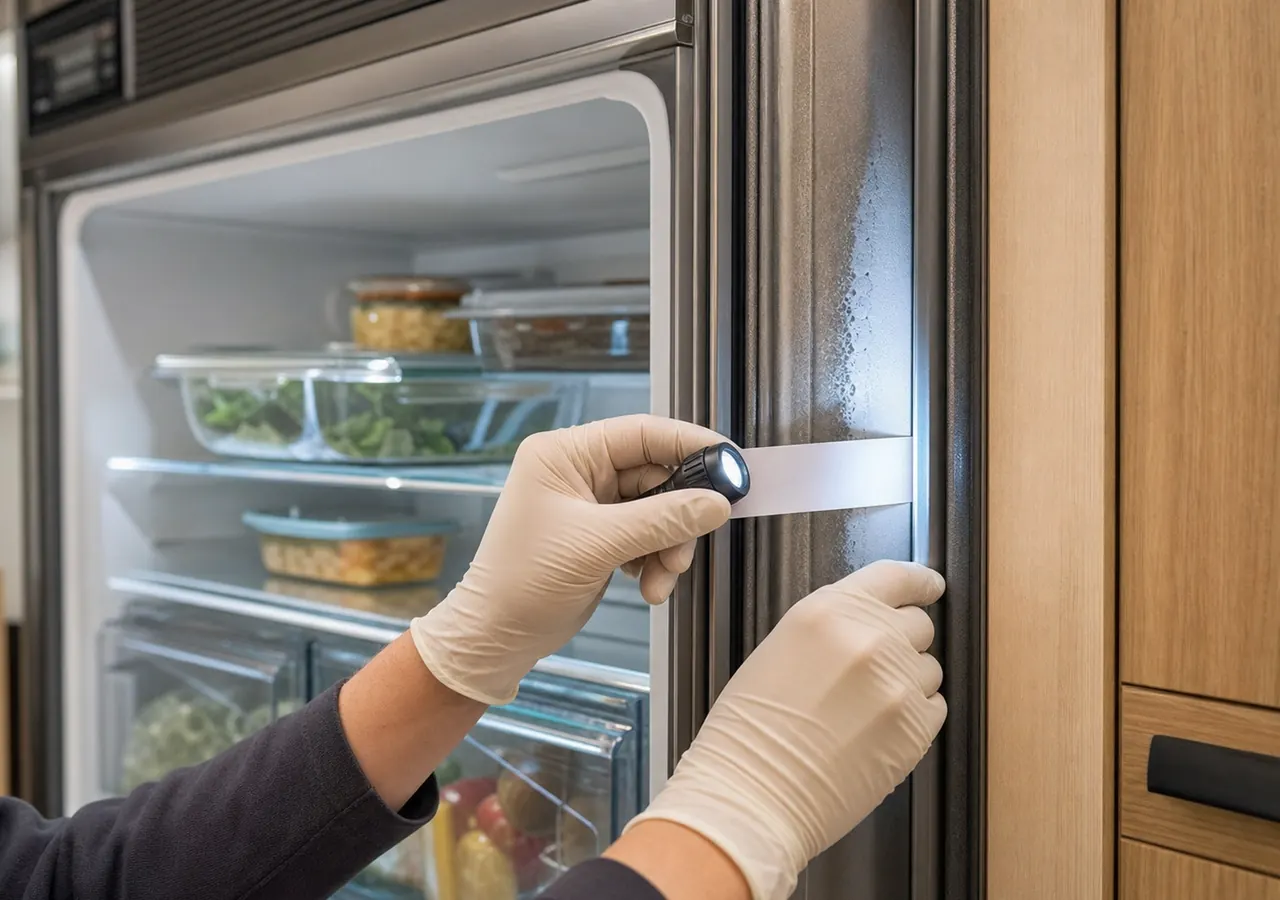
Condensation from a tired or misaligned door gasket. A gasket that no longer seals lets warm, humid room air slip in. That air condenses into frost, the frost melts, and the extra moisture either overruns the drain or runs down the inside of the door and onto the floor. Walnut Creek's swing from hot, dry afternoons to air-conditioned interiors raises the condensation load, so a marginal seal that would survive a milder coast climate weeps sooner here.
An overflowing evaporation pan. Less common, but on units where the lower grille has packed with a season of dry-weather dust, the condenser runs hotter and the drain pan can fill faster than it evaporates, then slosh over during a vibration or a door slam.
Why a built-in leak is more urgent than a freestanding one
A freestanding refrigerator leaks onto an open floor you can see and mop. A Sub-Zero is set flush into cabinetry, frequently over hardwood in a Downtown or Broadway Plaza condo, or into a custom run in a remodeled Northgate or Walnut Heights kitchen. The water wicks under the toe-kick, along the subfloor, and into the cabinet base where it is invisible until the flooring cups or the kick panel swells. By the time the damage shows, the repair is no longer about the refrigerator. That is why even a slow, intermittent drip is worth diagnosing within a day or two rather than waiting to see whether it stops on its own.
Repair versus a simple drain clear
Not every leak is an expensive repair. A clogged defrost drain is often the least costly outcome - a clear, flush, and verification that the next cycle stays dry. A failed inlet valve is a defined part with a defined price. A gasket that has lost its memory is a seal replacement and a hinge alignment. The point of a diagnosis-first visit is to prove which one you actually have before any part is approved, so you are not paying for a valve when the real fault was a $40 length of iced-up drain line. If you want the planning numbers first, the Walnut Creek Sub-Zero repair cost page lays out the ranges by symptom.
Find the source before the visit (without pulling the unit)
- Find the water, not just the puddle. Lay a dry paper towel along the toe-kick grille, under the left and right front corners, and behind the kick panel if it lifts off. A puddle that returns at the front-center usually traces to the defrost drain; water at one side hints at the water line or fill valve.
- Note when it pools. Write down whether the water shows up after a defrost cycle (every few hours), only on hot Diablo Valley afternoons, or constantly. Timing separates a frozen defrost drain from a steady inlet-valve drip before anyone opens the cabinet.
- Check the drip pan and the condenser area. On many built-ins the evaporated condensate is supposed to leave through a pan near the compressor. If the lower grille is packed with dust from a dry Walnut Creek summer, that pan can overflow instead of evaporating.
- Protect the floor and cabinetry first. Slide a towel or shallow tray under the front edge and stop loading the unit with warm groceries. Hardwood and custom toe-kicks in remodeled Walnut Heights and Saranap kitchens absorb water fast, so containment comes before any DIY poking.
- Do not force or pull the unit. Resist yanking a panel-ready column out over flooring or chipping ice off a drain with a screwdriver. A built-in that tips or scratches a custom panel turns a $300 drain clear into a cabinetry repair.
- Book a model-specific diagnosis. Have the model and serial tag photo ready and describe where the water sits. The visit confirms the actual leak path, clears or repairs it, and verifies a dry cycle before leaving.
Related Walnut Creek pages
Trace an overlapping symptom
Ice maker & water line
If the puddle is near the water line or the cubes are off, start with the fill tube, inlet valve and filter flow.
Door gasket & seal
Condensation drips often trace to a seal that no longer holds; gasket and hinge correction stops the moisture.
Back to Sub-Zero repair
The main diagnostic hub for every Walnut Creek built-in symptom, with price ranges and the visit sequence.
Sub-Zero leak questions from Walnut Creek
Why is water pooling under my Sub-Zero but the food is still cold?
That pattern almost always points to drainage, not cooling. A built-in defrosts on a schedule and routes the meltwater to a drain trough and an evaporation pan. If the drain is iced or clogged, the water has nowhere to go and spills to the floor while the compartment stays cold. It is a plumbing-path problem inside a working refrigerator.
Is hard Walnut Creek water part of the problem?
It can be. Central Contra Costa supply is moderately hard, and mineral scale builds slowly on the water inlet valve and fill tube of a Sub-Zero with a plumbed ice maker. Scale can hold a valve slightly open so it weeps, or narrow the fill tube so water backs up. We separate a mineral-fouled valve from a defrost-drain issue before any part is approved.
How urgent is a built-in refrigerator leak?
More urgent than a freestanding unit. A Sub-Zero sits flush in cabinetry, often over hardwood near Broadway Plaza condos or in remodeled Northgate kitchens, so water wicks under panels and subfloor where you cannot see it. Even a slow drip should be diagnosed within a day or two to protect the floor and the toe-kick.
Could a worn door gasket cause water on the floor?
Yes, indirectly. A tired or misaligned gasket lets humid air in, frost forms, and during defrost that extra moisture can overwhelm the drain or drip down the door. On hot, then air-conditioned Walnut Creek days the condensation load is higher, so a marginal seal shows up as drips sooner here.
What should I tell you when I book?
Tell us where the water sits (front center, one corner, inside the unit), how often it returns, the model number if you can reach the tag safely, and your neighborhood so we can plan access. That lets the technician arrive ready to clear a drain, rebuild a valve, or correct a gasket rather than guess.