Seasonal guide · 6 min read
What a Walnut Creek summer does to a built-in Sub-Zero
Triple-digit valley afternoons, hard water and tight Rossmoor clearances all push a built-in Sub-Zero harder here. What we see most, and how to stay ahead of it.
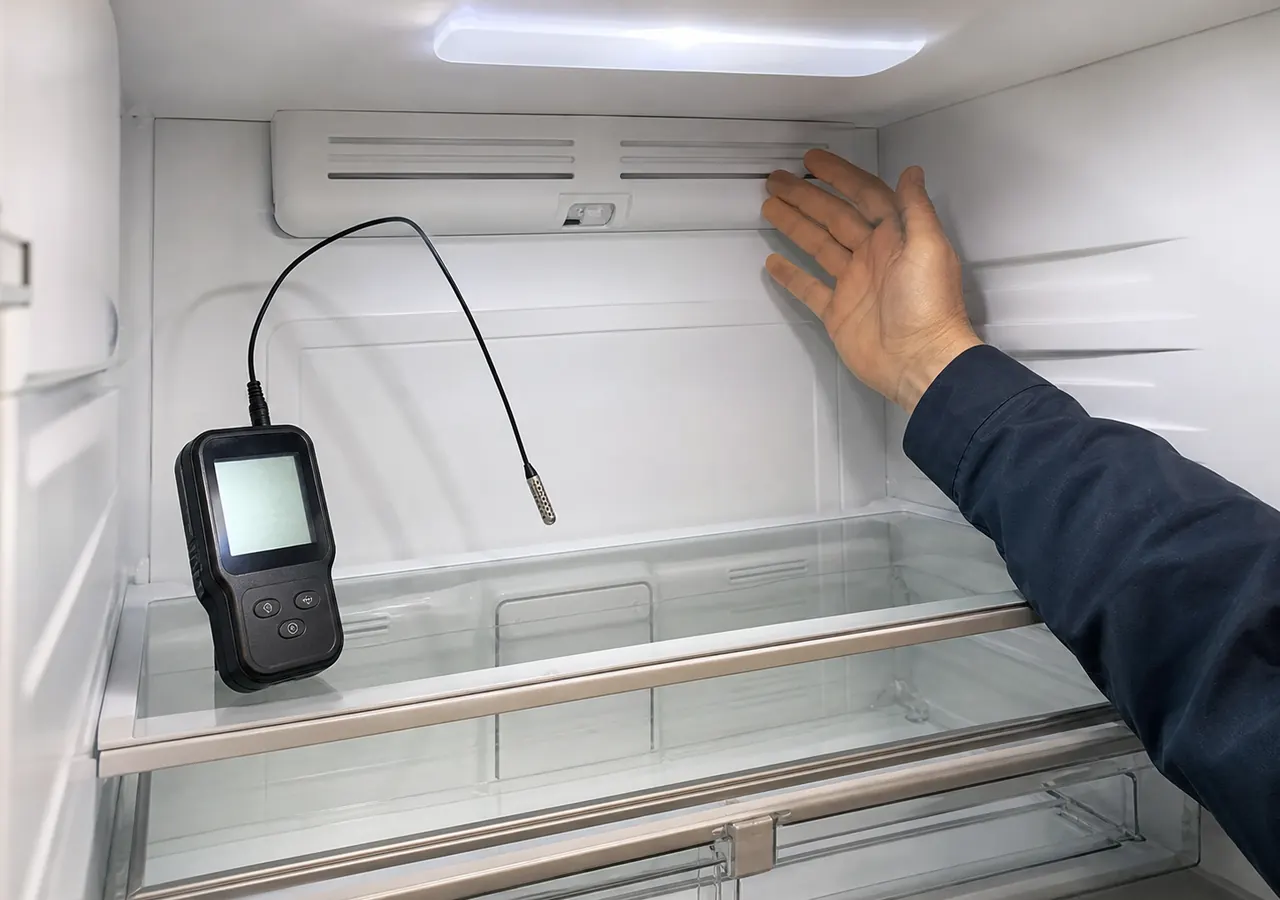
Walnut Creek sits in the inland crook of Central Contra Costa, tucked under Mount Diablo and well past the reach of the Bay's marine layer. That geography is wonderful for a July evening on the patio and hard on a refrigerator that has to dump its heat into a kitchen already running warm.
Most of the high-summer calls we make in town trace back to the same three things: the heat, the water, and the houses themselves.
Triple-digit afternoons load the compressor
A built-in Sub-Zero rejects heat by pulling room air across its condenser coil. When a Walnut Creek kitchen is sitting at 80-plus on a triple-digit afternoon, that incoming air is already hot, so the compressor has to run longer and harder just to hold its setpoint.
Do that across a long valley summer and a coil that is even slightly dust-loaded starts to fall behind in the late-day heat. The fix is rarely dramatic — a clean condenser and good airflow clearance restore most of the lost margin — but a neglected coil is the single most common reason a local unit struggles in August.
Hard valley water shows up in the ice and water side
Central Contra Costa water runs hard, and that mineral content collects exactly where you would expect: the fill valve, the water line, and the ice maker. Scale narrows the valve and slows the fill, which is why a hollow or undersized ice cube is such a frequent summer complaint here, right when the household wants ice most.
A scaled fill valve or a tired ice-maker module is a bounded, well-stocked repair. We check the water pressure and the valve before condemning the whole module, so you are not paying to replace a part that only needed the supply side cleared.
Rossmoor and the hillside homes change the visit
Access shapes the job as much as the fault does. Rossmoor's villas and condos off Tice Valley come with tighter clearances and community access rules, and the hillside homes near Rudgear Estates and Saranap can mean a column unit is a flight up from the door. We plan routing, parking and the likely parts before the visit so a single trip stays a single trip.
Get ahead of the heat
One yearly visit — a condenser cleaning, a gasket check, and a look at the fill valve and water pressure — is the highest-value thing a Walnut Creek owner can do. Schedule it in spring and the system heads into the valley's hottest months with full cooling margin instead of discovering the shortfall on the first 100-degree day.
Questions & answers
How often should a Walnut Creek Sub-Zero be serviced?
Once a year, ideally in spring before the valley heat sets in. The visit is a condenser clean, a gasket and airflow check, and a look at the hard-water fill side that drives most ice and water complaints here.
Why does my ice maker slow down every summer?
Usually the hard Contra Costa water, not the cold side. Scale narrows the fill valve and slows the water in, so cubes come out hollow or small. We check pressure and the valve before replacing the ice-maker module.
Do you cover Rossmoor and the hillside neighborhoods?
Yes — Downtown, the Ygnacio and Treat corridors, Northgate, Walnut Heights, Rudgear Estates, Saranap and Rossmoor off Tice Valley are all routine. Rossmoor's access rules we plan for ahead so the visit runs smoothly.
Go deeper
More Walnut Creek guides
Cove Dishwasher Code 600148: What It Means and What to Check
Cove dishwasher code 600148 is a control fault code. The 60-second reset, filter, drain and water checks to do first, and when to call a technician.
Read the guide → Frost & Defrost · 3 minWhy a Sub-Zero Frosts Up in Walnut Creek: Defrost Faults vs Gasket Leaks
Frost sheets on your Sub-Zero back wall or freezer drawers frozen shut in Walnut Creek? Tell a defrost or drain fault from a gasket leak, plus repair costs.
Read the guide → Error Code Decoder · 3 minSub-Zero Error Codes in Walnut Creek: One Service Light, Start to Finish
One Walnut Creek service call, followed from blinking freezer display to steady zero, decodes Sub-Zero error lights, wrench icons, and high-temp alarms.
Read the guide →