
Wine storage · 6 min read
When a Sub-Zero wine column drifts warm in Walnut Creek
A Walnut Creek cellar lives or dies by a degree or two. How dual-zone drift, a tired sensor and a loaded condenser put a built-in Sub-Zero wine column out of range here — and what an honest fix looks like.
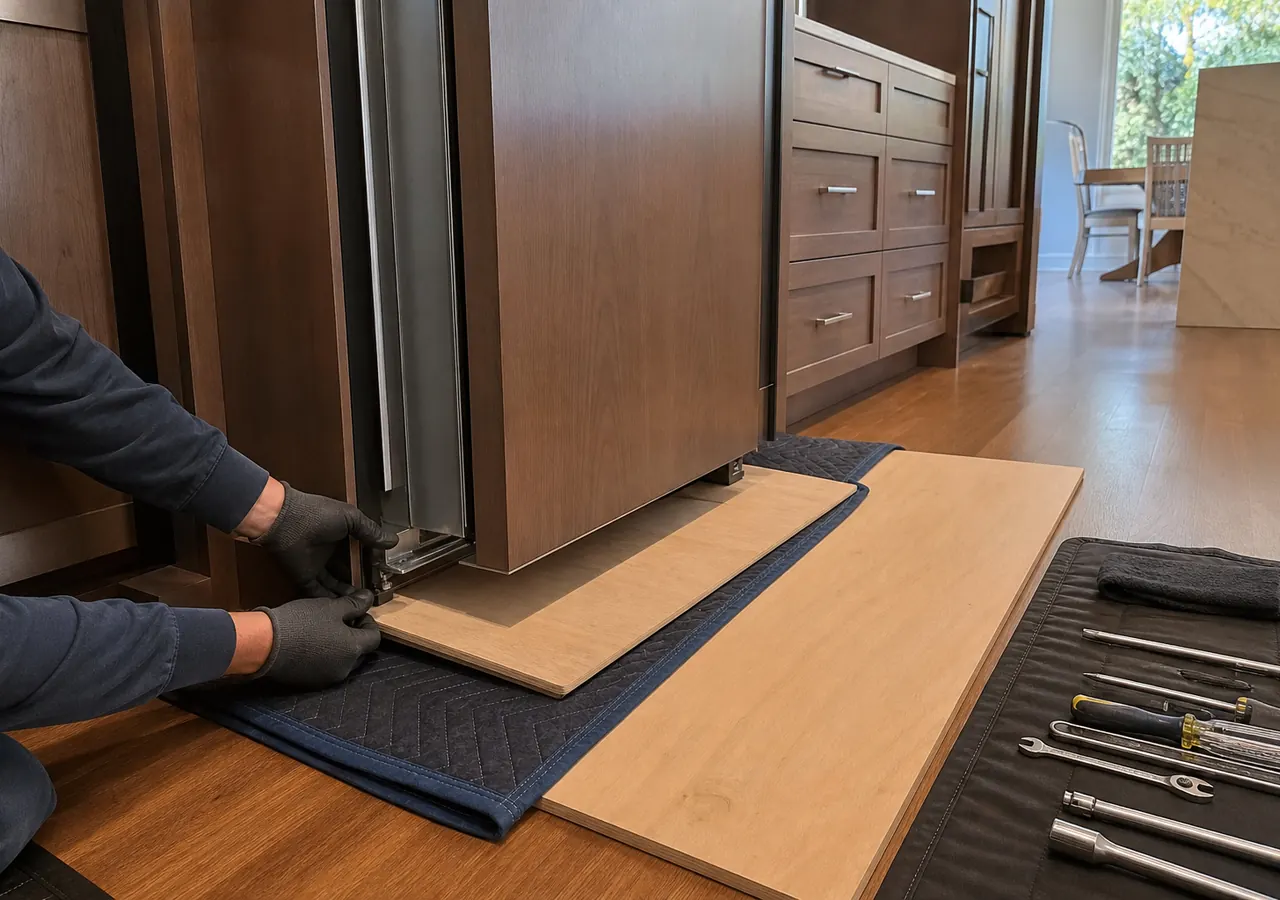
A built-in Sub-Zero wine column is not just a cold box — it is a climate instrument. Sub-Zero makes proper wine storage (the integrated and undercounter wine columns), and a collection only ages the way it should when those units hold their temperature, their humidity and their stillness within a tight band.
In Walnut Creek that band gets squeezed from the outside. We sit inland under Mount Diablo, past the marine layer, in a valley that runs hot and dry through a long summer — and many of the cellars we look after belong to households with serious bottles brought back from Napa, Sonoma and the Livermore Valley a short drive away. When a column drifts even a couple of degrees, the owner usually notices fast.
Dual zones, and why drift starts at the top
Most Sub-Zero wine units run two independently controlled zones — a cooler reds shelf and a colder whites or sparkling shelf — each with its own sensor and damper feeding off one sealed refrigeration system. That split is the unit's whole point, and it is also where most faults announce themselves.
When one zone holds and the other creeps warm, the cause is rarely the compressor. It is far more often a failing zone thermistor reading the cabinet wrong, a stuck damper, or an evaporator fan that has slowed. We read both zones against an independent probe before touching a part, because a single drifting sensor will happily report a problem that does not exist while the real one hides next to it.
Valley heat loads the sealed system
A wine column rejects its heat the same way the food refrigerators do — air across a condenser coil — and it does it in an environment far less forgiving than a kitchen fridge, because it is chasing a much narrower setpoint. On a triple-digit Walnut Creek afternoon, with the unit often built into cabinetry in a warm dining wall or a converted closet cellar, that condenser is working against hot incoming air all day.
Let the coil dust-load and the column simply cannot pull the last few degrees out in the late-day heat, so the whole cabinet rides warm. A clean condenser and proper clearance restore most of that lost margin. Only when the pressures are genuinely off do we look at the sealed system itself — a slow refrigerant leak or a tired compressor — and on those we put gauges on it and show you the readings before recommending anything.
The seal, the glass and the stillness
Three quieter things decide whether a wine column actually protects the bottles. The door gasket has to seal cleanly, or warm valley air leaks in and the unit runs constantly to compensate; a tired or distorted gasket is a bounded, well-stocked fix. The UV-treated glass door is part of the protection too — it shields the wine from light, and a failed seal at the glass shows up as condensation or fogging between panes.
And then there is vibration. Wine is meant to sit still so sediment stays put, so a column with a worn fan bearing or a compressor mount buzzing through the rack is a real problem even before the temperature wanders. We listen for it, because in a quiet Rossmoor villa or a Rudgear Estates dining room that hum is often the first thing the owner reports.
Repair or replace
Sensors, dampers, fans, gaskets and condenser cleanings are routine, genuine-OEM repairs that bring a column straight back into range — and on a Sub-Zero wine unit they almost always make sense. The honest pause comes only with a sealed-system failure on an older cabinet: there we show you the pressures, weigh the age, and sometimes tell you replacement is the smarter money. Either way the call is yours, made on real readings rather than a guess. Reach us by phone or book online, and we will load the likely parts for your model before the visit so a Walnut Creek cellar is back in band in one trip.
Questions & answers
Does Sub-Zero actually make wine refrigerators?
Yes — built-in and undercounter wine storage is part of the Sub-Zero line, separate from the food refrigeration and from the Wolf cooking equipment. The wine columns use the same sealed-system engineering, tuned to the tighter temperature and humidity a cellar needs.
One zone is warm but the other is fine — is the compressor dying?
Usually not. A single warm zone on a dual-zone column most often points to a failing thermistor, a stuck damper or a slowed evaporator fan, not the sealed system. We read both zones against an independent probe before replacing anything.
Why does my wine column struggle on the hottest Walnut Creek days?
It is chasing a narrow setpoint with a condenser that has to dump heat into hot inland air. A dust-loaded coil or tight cabinetry clearance is the common cause — a clean and good airflow usually restore the margin before any sealed-system work is needed.
Go deeper
More Walnut Creek guides
Cove Dishwasher Code 600148: What It Means and What to Check
Cove dishwasher code 600148 is a control fault code. The 60-second reset, filter, drain and water checks to do first, and when to call a technician.
Read the guide → Frost & Defrost · 3 minWhy a Sub-Zero Frosts Up in Walnut Creek: Defrost Faults vs Gasket Leaks
Frost sheets on your Sub-Zero back wall or freezer drawers frozen shut in Walnut Creek? Tell a defrost or drain fault from a gasket leak, plus repair costs.
Read the guide → Error Code Decoder · 3 minSub-Zero Error Codes in Walnut Creek: One Service Light, Start to Finish
One Walnut Creek service call, followed from blinking freezer display to steady zero, decodes Sub-Zero error lights, wrench icons, and high-temp alarms.
Read the guide →